

Most gold IRA sites are written by the company selling you the gold. Our Retirement Intelligence A briefing breaks down the rules, the red flags, and the real math—so you walk into any conversation already informed.
A Directed IRA can allow investors to hold certain precious metals, but before deciding are gold IRAs a good idea, it’s important to compare fold IRA companies, understand what is IRA silver, and learn what is IRA eligibility silver under current IRS rules. Researching these topics carefully can help you choose the right retirement strategy while ensuring your precious metals meet applicable IRA requirements.
Gold and silver have backed wealth for thousands of years. A Precious Metals IRA lets you hold physical bullion inside a tax-advantaged retirement account — governed by the same IRS rules as your current IRA.
Move funds from an existing 401(k), 403(b), or IRA with no taxes or penalties when done correctly.
Your metals are held in your name at an IRS-approved depository, fully insured against loss or theft.
Precious metals have historically held purchasing power when currencies and equities lose ground.
Most accounts are opened the same day you call — paperwork is handled for you, start to finish.
Transparent, flat-fee pricing with no surprise commissions on your purchase or annual storage.
One person guides your account from rollover through delivery — no call centers, no hand-offs.
An account manager will guide you through a simple application to get your account started. Once your account is active, connect you with a trusted precious metals investmen professional.
Protect your retirement with IRS-approved gold and silver.
Convert eligible retirement funds into physical precious metals that meet strict purity standards and are held through qualified custodians.
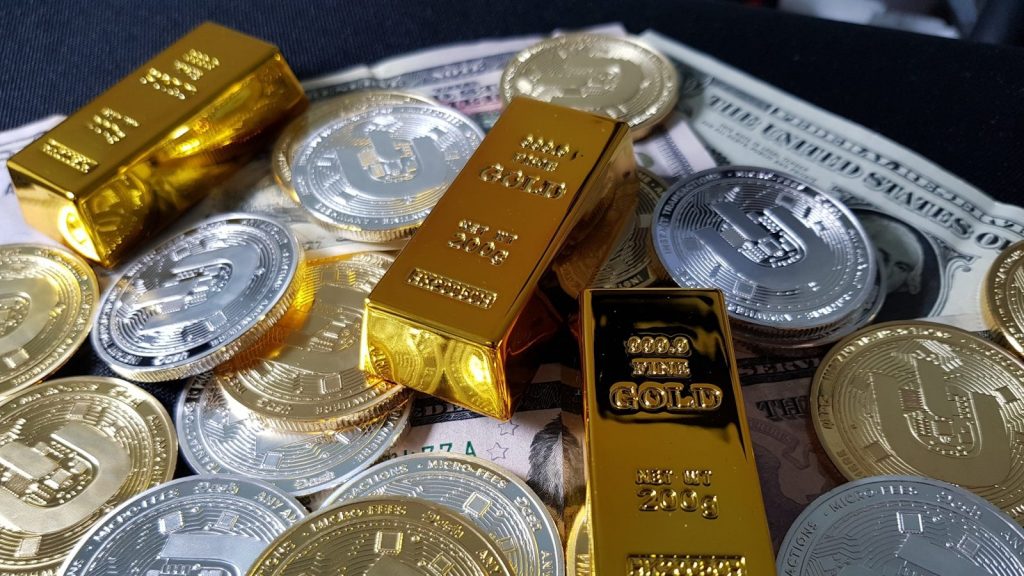
Discover how qualified retirement funds can be rolled over into self-directed precious metal IRAs featuring approved coins and bullion products.
Affiliate Disclosure: We are an affiliate marketing website and may receive compensation from lending partners. We are not a lender, do not make credit decisions, and do not guarantee approval. Loan terms and rates are determined by individual lenders.
Effective Date: July 4, 2026
Welcome to 401kMetals.com, a DBA of Feeboards LLC (“Company,” “we,” “our,” or “us”). These Terms and Conditions (“Terms”) govern your access to and use of our website.
By accessing or using this website, you agree to be bound by these Terms. If you do not agree with any part of these Terms, please discontinue use of the website.
401kMetals.com is an informational website and affiliate marketing platform that provides educational content about precious metals investing, Gold IRAs, Silver IRAs, retirement planning, and related financial topics.
We are not:
We do not provide personalized financial, investment, legal, or tax advice.
All information published on this website is intended solely for educational and informational purposes.
Nothing contained on this website should be interpreted as:
Always consult qualified financial, legal, and tax professionals before making investment decisions.
The information provided on this website does not constitute a recommendation regarding:
Investment decisions remain solely your responsibility.
401kMetals.com participates in affiliate marketing programs.
We may receive compensation if you:
Affiliate compensation does not increase the price you pay.
Compensation helps support the operation of this website.
We make no guarantees regarding:
Past performance does not guarantee future results.
We strive to publish accurate information.
However, financial regulations, IRS guidance, contribution limits, and investment products frequently change.
Accordingly, we cannot guarantee that every article or page is always current, complete, or error-free.
Users should independently verify information with official sources before making financial decisions.
Our website contains links to third-party websites.
These links are provided solely for your convenience.
We do not control or endorse third-party websites and are not responsible for:
Your use of third-party websites is governed by their own terms and policies.
Unless otherwise stated, all original content on this website, including:
is owned by Feeboards LLC or used under appropriate license.
You may:
You may not:
By using this website, you agree not to:
We reserve the right to restrict access to users who violate these Terms.
If you submit information through contact forms or email, you represent that:
We reserve the right to decline or ignore inappropriate communications.
Your use of this website does not create:
No professional services are provided through this website.
To the fullest extent permitted by law, Feeboards LLC, its owners, employees, affiliates, contractors, licensors, and partners shall not be liable for any direct, indirect, incidental, consequential, special, exemplary, or punitive damages arising from or related to:
Your use of this website is entirely at your own risk.
This website is provided on an “as is” and “as available” basis.
We make no warranties, express or implied, including but not limited to warranties regarding:
We do not guarantee uninterrupted access or error-free operation.
You agree to indemnify and hold harmless Feeboards LLC and its affiliates from any claims, damages, liabilities, losses, costs, or expenses arising from:
Your use of this website is also governed by our Privacy Policy.
Please review that policy to understand how we collect, use, and protect your information.
References to:
are provided for educational purposes only.
We do not guarantee that linked external information remains available or current.
We reserve the right to modify these Terms at any time.
Changes become effective immediately upon publication on this page.
Continued use of the website constitutes acceptance of the updated Terms.
These Terms shall be governed by and interpreted in accordance with the laws of the State of Ohio, without regard to its conflict of law principles.
Any disputes relating to these Terms or the use of this website shall be subject to the jurisdiction of the appropriate state or federal courts located in Ohio.
If any provision of these Terms is determined to be invalid or unenforceable, the remaining provisions shall remain in full force and effect.
These Terms constitute the entire agreement between you and Feeboards LLC regarding your use of 401kMetals.com and supersede any prior agreements or understandings relating to the website.
401kMetals.com
A DBA of Feeboards LLC
Address:
935 Obenour Court
Monroe, OH 45050
Phone:
(513) 279-8489
Email:
feeboards@gmail.com
Investing in precious metals and retirement accounts involves risk, including the possible loss of principal. The value of gold, silver, platinum, palladium, and other investments may fluctuate due to market conditions, economic events, interest rates, inflation, currency values, and investor demand.
Before opening a self-directed IRA, purchasing precious metals, or making any retirement investment, consult qualified financial, legal, and tax professionals. Information provided on 401kMetals.com is intended solely for educational purposes and should not be relied upon as personalized investment advice.
Investors exploring precious metals for retirement often begin with five practical questions: What is IRA eligibility silver?, how does a Directed IRA work, are gold IRAs a good idea, how should gold IRA companies be compared, and what is IRA silver? These questions overlap because buying physical precious metals through retirement savings involves more than choosing a coin or bar. Investors need to understand federal rules, custodians, storage, dealer pricing, fees, liquidity, and investment risk.
At 401kMetals.com, our goal is to provide educational information without promising future returns. Gold and silver can increase or decrease in value. Holding them through an IRA does not protect an investor against market losses.
When investors ask What is IRA eligibility silver?, the starting point should be federal collectibles rules rather than dealer advertising.
The IRS generally classifies metals and coins as collectibles, but federal law provides specific exceptions. IRS Publication 590-A explains that an IRA can invest in one-ounce silver coins minted by the U.S. Treasury and certain qualifying gold, silver, palladium, and platinum bullion.
That does not mean every silver coin, round, commemorative piece, or bar automatically qualifies. The exact product matters. For bullion, applicable fineness and custody requirements also matter.
A Directed IRA is commonly discussed when an investor wants greater control over retirement investments. In the precious-metals industry, the more familiar term is self-directed IRA.
The account remains an IRA and remains subject to applicable tax rules. Self-direction does not give an owner unrestricted personal use of retirement assets.
There is no universal answer to are gold IRAs a good idea.
Physical gold provides commodity exposure that differs from stocks and bonds. That may contribute to diversification for some investors. However, diversification does not guarantee profits or prevent losses.
Physical gold does not inherently generate dividends or interest. Gold prices can decline, and investors may encounter dealer premiums, storage expenses, custodian fees, and selling spreads.
The decision should therefore consider an investor’s overall portfolio, time horizon, liquidity requirements, risk tolerance, costs, and retirement objectives.
Consumers evaluating gold IRA companies should identify every business involved in the transaction.
The precious-metals dealer sells the gold or silver. The custodian administers the retirement account. Another company may provide physical custody or storage.
Ask for written pricing before transferring retirement money. Important information includes the purchase price of the exact coin or bar, underlying metal value, immediate repurchase price, annual custodian charges, storage expenses, transaction fees, and account-closing costs.
A legitimate custodian processing a transaction does not guarantee that a dealer’s product is competitively priced.
The question what is IRA silver is easier to understand when personally owned silver is separated from IRA-owned silver.
A person purchasing silver with non-retirement funds generally owns the metal personally. Physical silver purchased through an IRA belongs to the retirement account and must satisfy applicable retirement-account requirements.
Certain silver coins and qualifying bullion receive exceptions from the federal collectibles restrictions. Eligibility, however, does not constitute an IRS recommendation or guarantee that the product is a good investment.
| Characteristic | Physical Silver | Physical Gold | Conventional Securities |
|---|---|---|---|
| Market value can decline | Yes | Yes | Yes |
| Physical custody considerations | Yes | Yes | Generally no |
| Storage expenses possible | Yes | Yes | Generally no |
| Dealer spread possible | Yes | Yes | Different trading costs |
| Generates interest itself | No | No | Some investments |
| Generates dividends itself | No | No | Some investments |
| Specialized metal rules | Yes | Yes | Generally no |
| Guaranteed return | No | No | No |
This graph compares investment characteristics rather than inventing historical performance. An accurate performance graph would require a defined period, verified market data, fees, distributions, and consistent benchmarks.
A complete answer to What is IRA eligibility silver? requires looking at the exact silver product.
IRS guidance specifically identifies certain coins and permits certain qualifying bullion. Consumers should therefore be skeptical of broad advertising statements implying that every silver product sold by a precious-metals company can be placed into an IRA.
Before purchasing, obtain the product name, weight, fineness, manufacturer or mint, retail price, and the custodian’s confirmation that it will accept the asset.
Then evaluate pricing separately. IRA eligibility does not establish that a dealer’s price is reasonable.
Physical precious metals held through a Directed IRA create custody considerations that do not normally arise with stocks or mutual funds.
The IRS guidance on collectibles states that qualifying bullion under the exception must be in the physical possession of a bank or approved nonbank trustee.
IRS Publication 590-B also cautions that applicable coins must remain in the possession of the IRA custodian or trustee.
This is one reason investors should carefully investigate promotions involving personal or “home” storage of retirement-account metals.
Costs are essential when evaluating are gold IRAs a good idea.
Suppose the underlying gold in a product is worth $10,000 but the dealer sells the product for substantially more. If the dealer would immediately repurchase it for less than the purchase price, gold must appreciate enough to overcome that spread before the investor breaks even.
Account expenses can create additional costs. Depending on the provider, investors may encounter account-opening, annual administration, transaction, storage, distribution, or closing charges.
Request a complete written fee schedule rather than relying solely on an advertised annual fee.
When researching gold IRA companies, do not depend exclusively on testimonials, celebrity endorsements, online ratings, or “best company” lists.
Determine who produced a review and whether the publisher receives compensation for referrals. Affiliate compensation does not automatically make information inaccurate, but commercial relationships should be disclosed.
Investor.gov warns that self-directed IRA custodians generally do not evaluate the quality or legitimacy of an investment or verify promoter claims. Investors therefore need to investigate the dealer, custodian, asset, pricing, and custody arrangement independently.
Storage is another important component of what is IRA silver when physical bullion is involved.
Investors should understand who holds the metal, how holdings are documented, what storage charges apply, and what procedures apply when the silver is eventually sold or distributed.
Ask how the account determines the reported value of physical metals. Alternative assets may be harder to value than publicly traded securities.
The value shown on an account statement should not automatically be interpreted as the amount an investor could receive from an immediate sale.
A practical approach to What is IRA eligibility silver? is to evaluate each proposed investment individually.
First, identify the exact product. Second, determine which federal exception is claimed to apply. Third, confirm that the custodian accepts it. Fourth, understand where it will be held. Fifth, compare the dealer’s purchase and immediate repurchase prices.
Only then should an investor decide whether the allocation makes sense within the overall retirement portfolio.
Eligibility and suitability are different. A product can potentially satisfy IRA requirements while still being expensive or inappropriate for a particular investor.
The flexibility of a Directed IRA can provide additional investment choices, but it can also create additional responsibility.
Investor.gov warns about risks including fraud, high fees, limited information, limited liquidity, volatile performance, and complex tax rules.
Self-directed custodians generally administer assets rather than determine whether an investment is appropriate for the investor.
Be particularly cautious of guaranteed-return claims, pressure to transfer retirement savings immediately, or statements suggesting gold and silver cannot decline.
Every investment involves risk.
Another approach to are gold IRAs a good idea is to consider diversification instead of trying to predict the next movement in gold prices.
No one can reliably know whether gold will outperform stocks, bonds, cash, or silver during a future period.
A moderate precious-metals allocation may provide additional diversification for some investors, while moving most retirement savings into gold could create concentration risk.
Opportunity cost matters as well. Money invested in physical gold is not simultaneously invested in assets that might generate earnings, dividends, or interest.
Pricing among gold IRA companies can differ, particularly because physical products may include dealer premiums.
Ask for the current metal value, retail selling price, and immediate buyback price for the exact product. Comparing these numbers can reveal the economic effect of the spread.
Promotions also deserve scrutiny. If a company advertises “free” gold or silver, ask how the promotion is funded and whether the cost is reflected elsewhere in pricing.
The goal is not simply to find the lowest advertised fee. Investors should understand the total cost of buying, owning, storing, and eventually selling the metals.
Liquidity belongs in any complete explanation of what is IRA silver.
Physical silver can generally be sold, but selling bullion differs from clicking a sell button for a heavily traded security. Custodian and dealer procedures may affect timing, settlement, and the final price received.
Silver’s lower value per ounce relative to gold can also mean that an equivalent dollar investment requires substantially more physical metal.
Before purchasing, understand exactly how liquidation works, who can purchase the metal, what fees apply, and how long it normally takes for sale proceeds to become available to the IRA.
Before purchasing silver, investors researching What is IRA eligibility silver? should return to authoritative information.
The IRS explains that metals and coins generally fall within the collectibles rules, with exceptions for specified coins and certain qualifying bullion. Investors should then confirm the exact product with their custodian.
Ask why the product qualifies, where it will be held, what it costs relative to its metal value, and what would happen if it were sold immediately.
A careful review before purchasing can be easier than addressing an inappropriate transaction afterward.
A Directed IRA should be considered within an overall retirement strategy rather than merely as a method for purchasing alternative assets.
Investors need to understand transfers, rollovers, distributions, prohibited transactions, recordkeeping, beneficiaries, and account expenses in addition to understanding precious metals.
Account structure and investment performance are separate issues. A correctly established IRA can still hold an investment that loses money.
Likewise, an appreciating asset does not eliminate the need to comply with applicable retirement-account requirements.
Ultimately, are gold IRAs a good idea depends on the individual investor.
Potential advantages can include commodity exposure and diversification. Potential disadvantages include market volatility, dealer spreads, storage expenses, administrative costs, limited inherent income generation, liquidity considerations, and opportunity cost.
Someone who needs individualized investment or tax advice should consider consulting an appropriately qualified professional who is independent of the precious-metals sale.
Gold should be evaluated as an investment—not as guaranteed insurance against inflation, recessions, currency changes, or stock-market losses.
Before transferring retirement savings, compare gold IRA companies using consistent criteria.
Evaluate the dealer’s prices, buyback spreads, custodian, storage arrangement, account fees, liquidation procedures, disclosures, and compensation structure.
Avoid choosing a provider simply because it predicts a financial crisis or claims gold cannot decline. No dealer knows the future market price of gold.
Useful due diligence focuses on facts that can be verified today: what the investor is purchasing, what it costs, where it will be held, who administers the account, and how the investment can eventually be liquidated.
For investors still researching what is IRA silver, the central point is that retirement-account ownership changes the framework surrounding physical precious metals.
Certain silver products can qualify under exceptions to the federal collectibles restrictions, but the exact product and custody arrangement matter. IRA eligibility does not guarantee fair pricing, future appreciation, or suitability for every investor.
For more precious-metals retirement education, visit 401kMetals.com. Authoritative external resources include IRS Publication 590-A, IRS Publication 590-B, and the IRS guidance on collectibles.