

Most gold IRA sites are written by the company selling you the gold. Our Retirement Intelligence A briefing breaks down the rules, the red flags, and the real math—so you walk into any conversation already informed.
Adding Silver in an IRA through an sd-IRA allows eligible investors to purchase silver for IRA accounts while following IRS rules for approved precious metals. Before investing in silver in an IRA, it’s important to understand the eligibility requirements and storage regulations that apply to SIlver in IRA retirement accounts.
Gold and silver have backed wealth for thousands of years. A Precious Metals IRA lets you hold physical bullion inside a tax-advantaged retirement account — governed by the same IRS rules as your current IRA.
Move funds from an existing 401(k), 403(b), or IRA with no taxes or penalties when done correctly.
Your metals are held in your name at an IRS-approved depository, fully insured against loss or theft.
Precious metals have historically held purchasing power when currencies and equities lose ground.
Most accounts are opened the same day you call — paperwork is handled for you, start to finish.
Transparent, flat-fee pricing with no surprise commissions on your purchase or annual storage.
One person guides your account from rollover through delivery — no call centers, no hand-offs.
An account manager will guide you through a simple application to get your account started. Once your account is active, connect you with a trusted precious metals investmen professional.
Protect your retirement with IRS-approved gold and silver.
Convert eligible retirement funds into physical precious metals that meet strict purity standards and are held through qualified custodians.
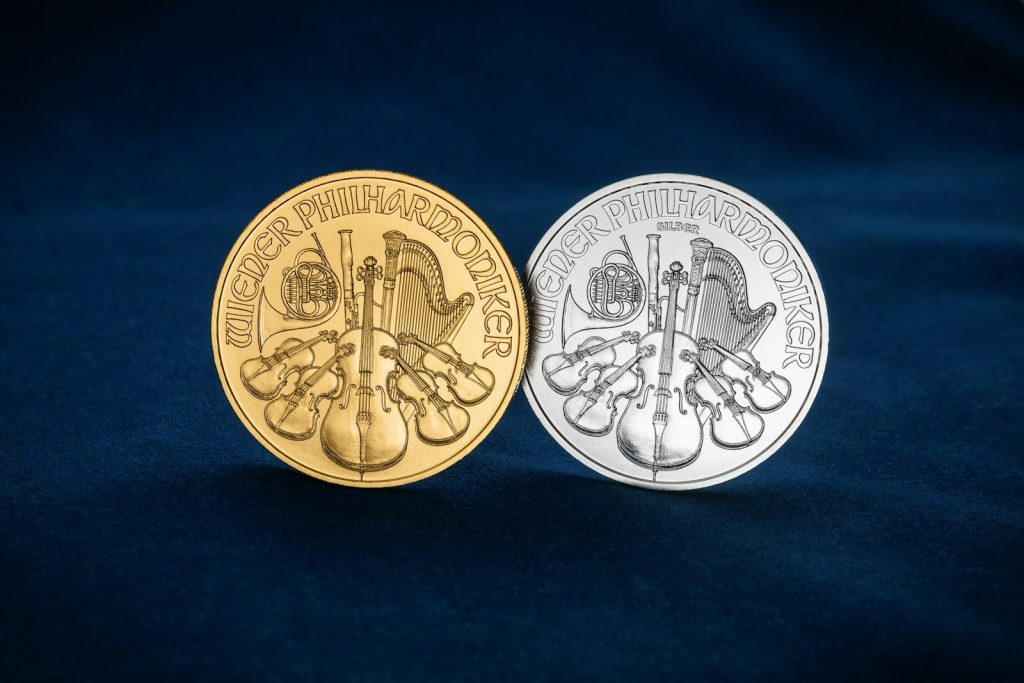
Discover how qualified retirement funds can be rolled over into self-directed precious metal IRAs featuring approved coins and bullion products.
Affiliate Disclosure: We are an affiliate marketing website and may receive compensation from lending partners. We are not a lender, do not make credit decisions, and do not guarantee approval. Loan terms and rates are determined by individual lenders.
Effective Date: July 4, 2026
At 401kMetals.com, a DBA of Feeboards LLC, we believe consumers should receive clear, honest, and transparent information before making financial decisions. This Truth in Lending Disclosure is designed to explain our role, how our website operates, and what you should understand before applying for financial products or opening a precious metals retirement account through one of our affiliate partners.
401kMetals.com is an educational and affiliate marketing website. We are not a lender, bank, credit union, broker-dealer, registered investment adviser, financial planner, precious metals dealer, or self-directed IRA custodian. We do not originate loans, establish retirement accounts, provide investment advice, or make lending decisions.
Our website provides educational information about topics including:
We may also introduce visitors to independent third-party companies that offer retirement account administration, precious metals, or related financial services.
We do not guarantee that you will qualify for any product or service offered by a third party.
401kMetals.com does not:
Any approval, pricing, eligibility, or account terms are determined solely by the third-party company you choose to work with.
Gold, silver, platinum, and palladium are investments whose values fluctuate over time.
The price of precious metals may increase or decrease due to:
Past performance does not guarantee future results.
Investing in precious metals involves risk, including the possible loss of principal.
A Gold IRA or other self-directed IRA is a specialized retirement account administered by an IRS-approved custodian.
Before opening one of these accounts, consumers should understand:
Not every coin or bullion product qualifies for IRA ownership.
Always verify eligibility with your custodian before making a purchase.
Fees associated with precious metals retirement accounts vary by provider.
Potential fees may include:
401kMetals.com does not determine these fees.
Consumers should carefully review all disclosures provided by the company they choose before opening an account.
We do not guarantee:
Every investment carries risk.
If you click links on our website, you may be directed to an independent third-party website.
Those companies establish their own:
You should carefully review all disclosures before entering into any financial agreement.
401kMetals.com participates in affiliate marketing programs.
We may receive compensation when visitors:
This compensation does not increase the price you pay for products or services.
Our educational content is intended to remain independent regardless of affiliate relationships.
Before making any retirement or investment decision, consumers should:
Retirement investing should be based on your individual financial goals, risk tolerance, and personal circumstances.
Information provided on 401kMetals.com is intended solely for educational purposes.
Nothing published on this website should be interpreted as:
Always consult licensed professionals before making financial or retirement decisions.
Consumers seeking additional information may consult:
These agencies publish authoritative information regarding retirement accounts and investment risks.
401kMetals.com
A DBA of Feeboards LLC
Address:
935 Obenour Court
Monroe, OH 45050
Phone:
(513) 279-8489
Email:
feeboards@gmail.com
By using 401kMetals.com, you acknowledge that you have read and understood this Truth in Lending Disclosure. You understand that 401kMetals.com is an informational and affiliate marketing website only, does not provide loans or investment advice, and does not make lending or retirement account decisions. All financial products, investment opportunities, account terms, and eligibility requirements are determined solely by the independent third-party providers with whom you choose to do business.
Investors who want physical precious metals in retirement accounts often research Silver in an IRA, how an sd-IRA works, which products qualify as silver for IRA ownership, whether a silver investment in an IRA fits a diversified portfolio, and how self directed iras differ from conventional retirement accounts. These topics are connected, but each involves separate questions about eligibility, custody, pricing, fees, liquidity, and risk.
At 401kMetals.com, the goal is to help investors understand precious-metals retirement accounts without suggesting that silver is guaranteed to rise. Silver prices can move sharply in either direction. An IRA can provide tax advantages, but the account structure does not remove investment risk.
Holding Silver in an IRA is different from purchasing coins or bars personally. Federal tax law generally treats metals and coins as collectibles, but there are exceptions for specified coins and certain qualifying bullion. IRS Publication 590-A explains that an IRA may invest in one-ounce silver coins minted by the U.S. Treasury and certain qualifying precious-metal bullion.
That distinction matters because not every silver coin, commemorative product, round, or bar automatically qualifies. Investors should identify the exact product before authorizing a purchase and confirm that their custodian will accept it.
An sd-IRA is shorthand commonly used for a self-directed individual retirement account. It remains an IRA, but the custodian permits a broader selection of investments than many conventional brokerage custodians offer. Alternative assets may include precious metals, real estate, private securities, and other investments.
Before buying silver for IRA ownership, investors should request the product name, mint or manufacturer, weight, fineness, retail price, and current repurchase price. Eligibility and value are different questions. A product might satisfy applicable retirement-account requirements while still carrying a large dealer premium.
The IRS collectibles guidance explains the exceptions for specified coins and qualifying gold, silver, platinum, and palladium bullion. Investors should use primary sources and their custodian to verify a product instead of relying only on advertising phrases such as “IRA ready.”
A silver investment in an IRA can add commodity exposure to retirement savings. Silver behaves differently from ownership in an operating company or a bond, so some investors consider it as part of a diversified portfolio. Diversification, however, does not guarantee profits or protect against every loss.
Physical silver does not inherently generate dividends or interest. Returns depend largely on future silver prices after dealer premiums, account expenses, storage costs, and liquidation spreads. Those costs should be considered before deciding how much retirement money, if any, to allocate.
Investors researching self directed iras should understand what the custodian does and does not do. Investor.gov explains that self-directed custodians generally hold and administer assets but do not evaluate the quality or legitimacy of investments, verify promoter claims, or provide investment advice.
That means a custodian processing a silver purchase does not establish that the dealer offered a fair price. Investors remain responsible for investigating the metal, dealer, fees, custody arrangement, and eventual exit strategy.
| Characteristic | Physical Silver | Physical Gold | Conventional Securities |
|---|---|---|---|
| Market value can decline | Yes | Yes | Yes |
| Physical custody issues | Yes | Yes | Generally no |
| Storage expenses possible | Yes | Yes | Generally no |
| Dealer spreads possible | Yes | Yes | Different trading costs |
| Produces interest itself | No | No | Some assets do |
| Produces dividends itself | No | No | Some assets do |
| Special metal eligibility rules | Yes | Yes | Generally no |
| Guaranteed return | No | No | No |
This comparison avoids invented performance figures. A historical-return graph would require a defined period, verified market prices, consistent benchmarks, and assumptions about fees.
Custody is central to Silver in an IRA. The IRS IRA FAQs explain that the exception for certain highly refined bullion requires physical possession by a bank or an IRS-approved nonbank trustee. The IRS says the rule also applies to indirect arrangements such as an IRA-owned LLC purchasing bullion.
IRS Publication 590-B additionally cautions that applicable coins must remain in the possession of the IRA custodian or trustee. Investors should therefore investigate home-storage promotions carefully rather than assuming that creating an LLC removes federal custody requirements.
Before opening an sd-IRA, compare custodians and ask for complete written fee schedules. Possible costs may include account-opening charges, annual administration, transactions, asset-specific fees, storage, distributions, and account termination. The exact fee structure varies among providers.
If a nonbank business will act as trustee or custodian, investors can review the IRS approved nonbank trustees and custodians list. Investors should also independently research the dealer and storage provider rather than treating the custodian’s participation as an endorsement.
The cost of silver for IRA investing is not necessarily the same as the quoted spot price. Physical products commonly trade above their underlying metal value because retail pricing can incorporate manufacturing, distribution, dealer margins, and market conditions.
Ask the dealer two questions at the same time: what will this exact product cost today, and what would you pay to buy it back today? The difference helps reveal the spread an investor may need to overcome before reaching break-even. Storage and administrative expenses can increase that hurdle over time.
One possible reason to consider a silver investment in an IRA is diversification. Silver has investment demand and significant industrial uses, so its market can respond to economic conditions differently from stocks or bonds.
Still, placing a very large share of retirement savings into one commodity can create concentration risk. Investors should consider their complete portfolio, including other retirement accounts, rather than evaluating silver in isolation. Time horizon, risk tolerance, liquidity needs, existing assets, and expected retirement spending can all influence an appropriate allocation.
The broader choices available through self directed iras can create risks that deserve attention. Alternative investments may be less liquid or harder to value than publicly traded securities. Account statements may not always reflect a price that could actually be obtained in an immediate sale.
Investor.gov also warns investors about fraudulent promoters and fake custodians. Independent verification matters. A legitimate custodian does not make every investment offered through that custodian legitimate, fairly priced, or suitable.
Before purchasing Silver in an IRA, identify the precise coin or bullion product and determine why it qualifies under the applicable exception. Do not assume that silver content alone establishes eligibility.
The IRS explains that an IRA acquiring a collectible can be treated as receiving a distribution equal to the amount invested, subject to applicable tax consequences. That makes product verification important before the transaction occurs. Investors with complicated arrangements should consider consulting an independent tax or legal professional familiar with retirement-account rules.
An sd-IRA also requires attention to prohibited-transaction rules. Retirement assets are not the same as personally owned assets, even when the account owner chooses the investments. Certain dealings between an IRA and the owner or other disqualified persons can create serious tax consequences.
Investors should avoid assuming that “self-directed” means unrestricted. The term refers to broader investment direction, not freedom from federal IRA rules. When a transaction involves related parties, personal use, unusual ownership structures, or indirect possession, professional guidance may be appropriate.
Liquidity should be considered before purchasing silver for IRA purposes. Physical silver can be sold, but liquidation may involve more steps than selling a widely traded stock or fund. The investor may need to work through the custodian and dealer, and the final selling price may differ from the metal’s quoted market price.
Ask who can purchase the metal, how the sale price is determined, whether transaction fees apply, and how long settlement normally takes. Understanding the exit process before buying can prevent surprises later.
A silver investment in an IRA should be evaluated over the investor’s intended holding period rather than on short-term price predictions. No dealer or commentator can reliably guarantee whether silver will outperform stocks, bonds, gold, or cash during a future period.
Potential advantages include commodity exposure and diversification. Potential disadvantages include volatility, dealer premiums, storage, administrative expenses, opportunity cost, and the lack of inherent dividend or interest payments from physical bullion.
Fees associated with self directed iras deserve careful comparison because expenses reduce net returns. Investor.gov notes that fees can be significantly higher than those associated with some conventional investment accounts.
Request costs in writing and determine whether fees are flat, transaction-based, asset-based, or tied to storage. Also ask about charges for selling metals, taking distributions, wiring funds, closing the account, or transferring assets to another custodian. Comparing total costs is more useful than focusing on one advertised fee.
Investors considering Silver in an IRA should also think about eventual retirement distributions. The value of physical metals can change, and liquidation procedures may take longer than selling conventional publicly traded assets. Understanding the custodian’s procedures in advance can help investors plan for future cash needs.
An sd-IRA can provide a broader investment menu, but broader choice does not automatically mean better results. Conventional brokerage accounts may provide easier access to liquid securities, while alternative-asset accounts can involve specialized administration and additional expenses.
The appropriate structure depends on the assets an investor wants to own and whether the additional responsibilities and costs are justified.
Before selecting silver for IRA, compare more than product eligibility. Evaluate the dealer premium, storage arrangement, custodian expenses, potential selling spread, and the role the metal would play within the total retirement portfolio.
An eligible product can still be overpriced. A lower-premium product is not automatically appropriate either. Eligibility, pricing, risk, and portfolio suitability should be evaluated separately.
A silver investment in an IRA should fit into a broader retirement strategy instead of being based on predictions that silver is certain to rise. Commodity markets can experience extended periods of gains, declines, and volatility.
Investors should consider how much exposure they already have to precious metals and whether other assets provide income, growth, liquidity, or diversification characteristics that silver does not.
Investors using self directed iras should remember that additional investment freedom brings additional due-diligence responsibilities. The custodian’s willingness to hold an asset is not a guarantee of its value, legitimacy, or future performance.
For additional precious-metals retirement education, visit 401kMetals.com. Useful authoritative resources include IRS Publication 590-A, IRS Publication 590-B, the IRS collectibles guidance, and the IRS IRA FAQs.